
Procedure Guide · August 3, 2026 · 5 min · By Zofia Cardenas
Why the Nasal Tip Is the Last Part of Your Nose to Look Final
Tip swelling after rhinoplasty can linger for a year or more while the bridge settles in weeks. The reason is anatomy, not a surgical error. Here is the mechanism, the timeline, and what actually helps.
Ask almost anyone six months out from rhinoplasty what bothers them, and the answer is rarely the bridge. It is the tip. Patients describe it as round, firm, slightly upturned, or simply not the tip they saw in their surgeon's simulation. Surgeons hear this so often that many build it into the consultation script: the tip is the last region of the nose to reach its final shape, and in some patients that process takes twelve to eighteen months. This is not a stalling tactic. It reflects specific, well-understood features of nasal anatomy and wound healing.
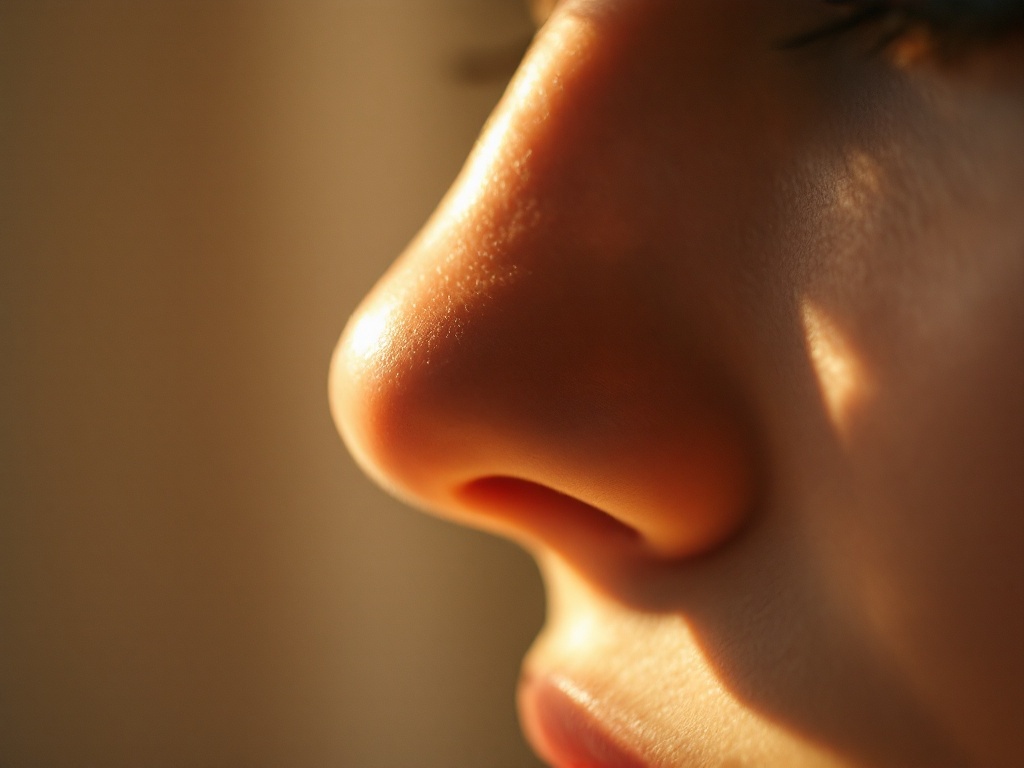
The skin over the tip is different skin. The soft tissue envelope of the nose is not uniform. Over the upper two thirds, the bony and cartilaginous bridge, the skin is relatively thin and tightly adherent. Over the tip and the alae, the skin thickens considerably and contains more sebaceous glands, more fibrofatty tissue, and a denser subdermal layer. Thicker tissue holds more edema, plainly meaning more fluid, and it releases that fluid more slowly. Two patients can have identical cartilage work and dramatically different swelling timelines purely because one has thin Northern European tip skin and the other has thick sebaceous skin, which is common in many Mediterranean, Middle Eastern, African, and Asian noses.
Surgery interrupts the drainage system. The nose clears fluid through lymphatic channels that run predominantly upward and outward toward the cheeks and the area between the eyes. Elevating the skin during rhinoplasty, whether through an open or closed approach, necessarily divides some of these channels. They regenerate, but slowly, and the tip sits at the far end of the drainage route. Fluid that accumulates there has the longest path out. The open approach, which involves a small incision across the columella, disrupts a few additional lymphatic pathways at the base of the tip, which is one reason open rhinoplasty tips are often reported to stay swollen somewhat longer than closed ones. The difference is real but usually modest, measured in months, not years, and surgeons choose the approach based on what the reconstruction requires, not swelling alone.
Scar tissue matures on its own clock. Beneath the skin, the body lays down collagen wherever tissue was elevated or cartilage was sutured and grafted. Early scar is disorganized, water-rich, and bulky. Over roughly a year, enzymes remodel it: collagen fibers reorganize, water content drops, and the layer thins and softens. This maturation is why a tip that looks bulbous at month four can look refined at month fourteen with no intervention at all. It is also why experienced surgeons resist judging, or revising, a result before the twelve month mark. Operating on immature scar risks chasing a problem that was going to resolve.
What the typical timeline looks like. In the first two weeks, generalized swelling dominates and the splint comes off to a nose that is recognizably improved but clearly puffy. By six to eight weeks, most bridge swelling is gone and the profile looks close to final in photographs. From month three onward, changes concentrate in the lower third: the supratip, the area just above the tip, gradually deflates, tip definition emerges, and the slight over-rotation many surgeons build in settles downward. Somewhere between months nine and eighteen, depending heavily on skin thickness and whether the surgery was a revision, the tip reaches its stable shape. Revision cases run longer because previously scarred tissue swells more and drains worse.
What actually helps, and what does not. Sleeping with the head elevated for the first several weeks reduces overnight fluid pooling. Limiting sodium and avoiding strenuous exercise early on keeps blood pressure spikes from driving fluid into healing tissue. Some surgeons use short courses of taping at night to compress the supratip in thicker-skinned patients, and dilute steroid injections, typically triamcinolone in small carefully spaced doses, can flatten a stubborn supratip fullness sometimes called a soft tissue pollybeak. These injections are a legitimate clinical tool but carry real risks, including skin thinning and depressions, so they belong in the operating surgeon's hands, not a general injector's. Aggressive massage, lymphatic drainage devices marketed online, and supplements sold for swelling have little supporting evidence for the nasal tip specifically.
When persistent fullness is not just swelling. If the tip remains broad past eighteen months, the cause is usually structural: residual cartilage width, excess scar formation in thick skin, or graft-related fullness. At that point the conversation shifts from patience to evaluation. The practical takeaway is a matter of calibration. Judge the bridge at two months, judge the tip at a year, and understand that the wait reflects lymphatic anatomy and collagen biology, not a result gone wrong.
Related reading: Why the Nasal Tip Is the Last Part to Look Finished After Rhinoplasty.
More in Explainer
View all →- Spreader Grafts vs. Spreader Flaps: How Surgeons Rebuild the Middle of the Nose
- Piezoelectric Rhinoplasty vs. Traditional Osteotomies: What the Ultrasonic Tool Actually Changes
- Spreader Grafts vs Spreader Flaps: How Surgeons Protect Your Breathing After a Hump Reduction
- Why the Nasal Tip Is the Last Part of Your Nose to Look Final