Recovery · July 23, 2026 · 7 min · By Jasper Aoki
Vaping After Rhinoplasty: What Nicotine Actually Does to a Healing Nose
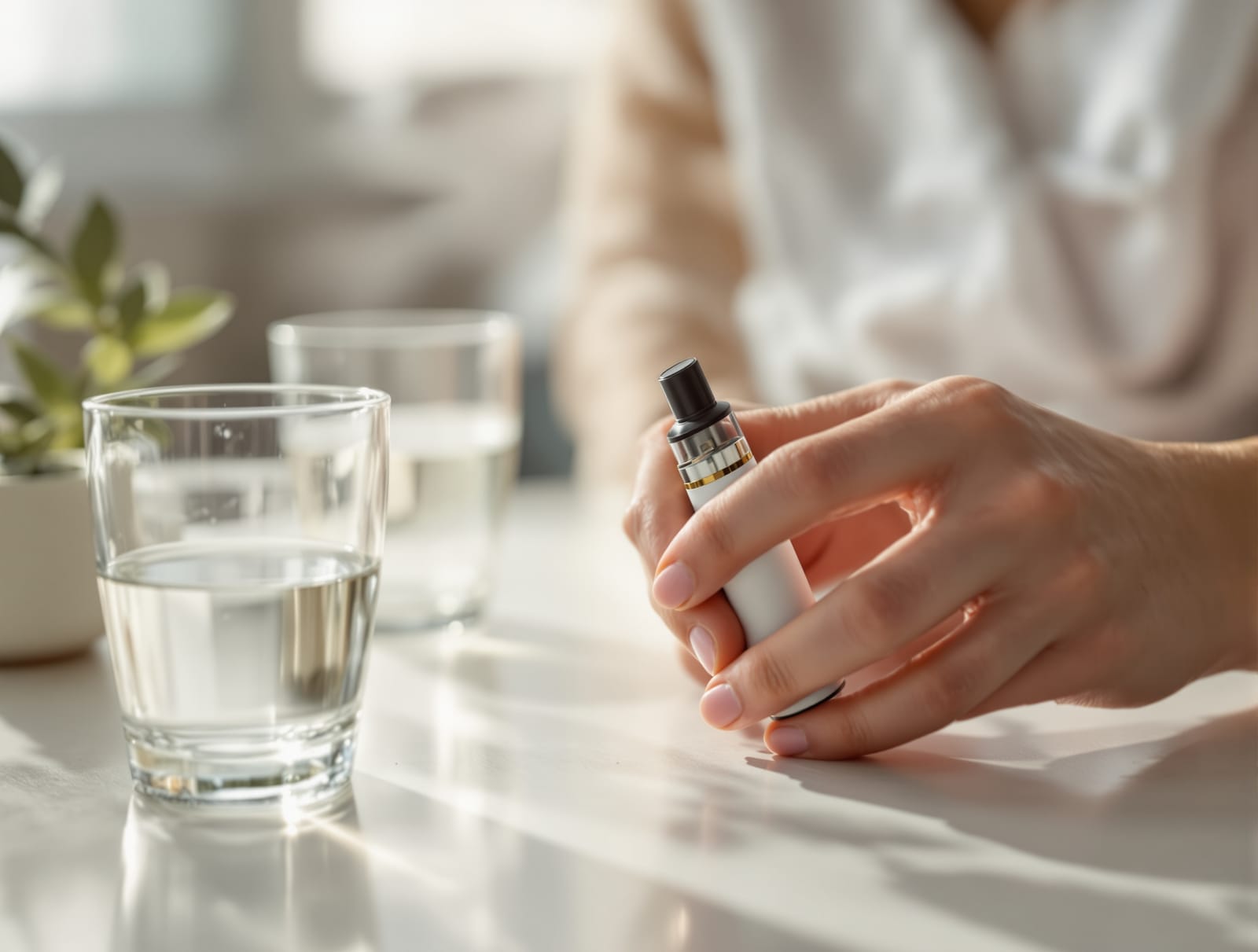
Vaping skips the smoke of a cigarette but delivers the same nicotine, and nicotine is the ingredient that starves a healing nose of oxygen, which is why for surgery a vape is not the safer choice it feels like.
Ask a rhinoplasty patient in their twenties whether they smoke and many will say no, honestly, while vaping every day. The assumption underneath is reasonable and wrong: that because vaping skips the tar and smoke of cigarettes, it is safe around surgery. For wound healing, the ingredient that matters most is not the smoke. It is the nicotine, and a vape delivers plenty of it.
This article exists to give you what a generic no-smoking instruction does not: a nicotine-abstinence timeline built specifically for vapers, including the hidden sources people forget, and an honest account of what we do and do not know about vaping and surgical healing. If you vape, this is the safety conversation to have before you book a nose.
Start with why nicotine is the problem. Nicotine is a potent vasoconstrictor, meaning it clamps down the small blood vessels that carry oxygen to healing tissue. Rhinoplasty depends on delicate skin over the nose surviving on a reduced blood supply while it heals over a rebuilt framework, and the StatPearls review of impaired wound healing names nicotine among the agents that cause tissue ischemia and slow repair. Vaping delivers nicotine as efficiently as a cigarette, and in some devices more, so from the blood vessels point of view a vape and a cigarette are asking the nose to heal on the same starved oxygen supply.
The stakes in rhinoplasty specifically are skin and grafts. When the nasal skin does not get enough blood, healing slows, infection risk rises, scars widen, and in the worst cases patches of skin can break down, a catastrophe over a freshly reshaped nose. Cartilage grafts, the structural pieces a surgeon may place, also depend on the surrounding tissue staying healthy enough to nourish them. This is the same mechanism behind the warnings in our guide on smoking risks and rhinoplasty; vaping simply arrives at the same danger by a cleaner-looking route.
Now the timeline, the part built for vapers. The evidence on surgical healing points to stopping all nicotine at least four weeks before surgery, because tissue oxygenation and inflammatory function recover meaningfully around that four-week mark, while quitting only a few days out does little. So the target is to be fully nicotine-free for four weeks or more before your surgery date, and to stay off it through at least the first several weeks after, the critical window when the nasal skin is most vulnerable. Longer is better on both ends. Nicotine's effect on your blood vessels is not undone the moment the vape is put down; the vessels need weeks to normalize.
Here is the hidden-nicotine checklist people miss, and it is where good intentions quietly fail. Nicotine-replacement products count: patches, gum, lozenges, and nicotine pouches all deliver the same vasoconstricting drug and are not a safe bridge through your surgical window, even though they feel like quitting. So-called nicotine-free vape juice is only as trustworthy as its labeling, and mislabeled nicotine content in unregulated products is common, so a nicotine-free claim is not a guarantee. Secondhand exposure and shared devices count too. And be honest with your surgeon and anesthesiologist, because the risk they are managing depends on the truth, not on what sounds acceptable. The StatPearls monograph on nicotine is blunt that the addictive pull is real, which is exactly why a plan beats willpower.
And here is what the studies do not tell you cleanly, stated plainly because you deserve the honest version. Most of the strong surgical evidence on nicotine and wound healing comes from research on cigarettes, not vaping, because vapes are newer and long-term surgical data on them is still thin. That means the precise risk multiplier for vaping in rhinoplasty is extrapolated from the shared ingredient, nicotine, rather than measured directly for vaping itself. Some researchers also worry about the other compounds in vape aerosol, but those effects on surgical healing are not well quantified yet. None of this makes vaping safe around surgery; the known vasoconstriction alone is reason enough to stop. It simply means anyone quoting you an exact vaping risk number is guessing, and the safe move under uncertainty is abstinence, not optimism.
Two practical steps make this achievable. Treat the run-up to surgery as a genuine quit attempt with a start date four to six weeks out, and use the momentum of the surgery as motivation, since the same habits that protect your nose also improve every other part of faster healing. And fold this into your broader understanding of what can go wrong, laid out in our overview of rhinoplasty risks, so the abstinence feels like the protective choice it is rather than an arbitrary rule.
The takeaway is one sentence you can act on today. For a healing nose, a vape is not a safer cigarette; it is the same nicotine wearing a cleaner outfit, so stop all nicotine at least four weeks before rhinoplasty and stay off it through early recovery. The patients who protect their result are not the ones who switched to vaping before surgery. They are the ones who put the nicotine down entirely and gave their nose the blood supply it needed to heal.