
Rhinoplasty News · August 3, 2026 · 4 min · By Zofia Cardenas
Piezoelectric Rhinoplasty vs. Traditional Osteotomies: What the Ultrasonic Tool Actually Changes
Ultrasonic bone instruments are marketed as a gentler way to reshape the nose. Here is what the technology does at a mechanical level, where the evidence supports it, and where the claims outrun the data.
If you have researched rhinoplasty in the past few years, you have probably seen the phrase piezoelectric rhinoplasty, sometimes called ultrasonic rhinoplasty. It is often presented as a bruise-free, pain-free upgrade to the standard operation. The reality is more specific and more interesting. Piezoelectric instruments change one part of the procedure, the way bone is cut and reshaped, and understanding that distinction helps patients ask better questions in consultations.
What the bony work in rhinoplasty actually involves. The upper third of the nose is a pyramid of paired nasal bones. To narrow a wide bridge, close an open roof after hump removal, or straighten a deviated pyramid, surgeons perform osteotomies, controlled cuts that let the bones move to a new position. Traditionally this is done with fine chisels called osteotomes, driven by a mallet, or with rasps that file bone down gradually. These tools work well in experienced hands, but they are percussive and somewhat blind. The force that cuts bone can also propagate into surrounding soft tissue, tearing small blood vessels in the periosteum, the thin membrane that covers bone. That vessel injury is the main source of the bruising under the eyes that many patients associate with rhinoplasty.
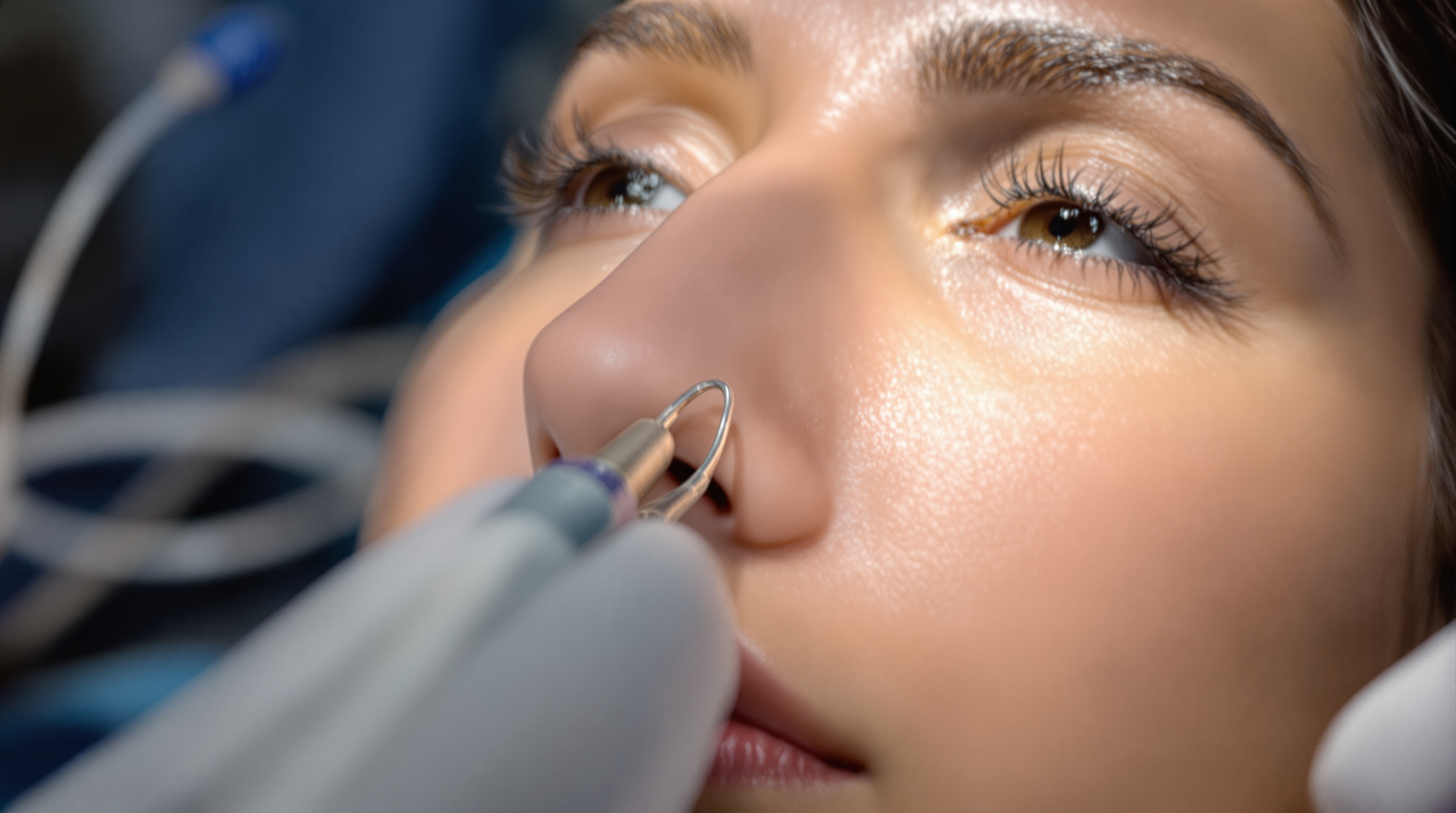
How the piezoelectric device works. A piezoelectric insert vibrates at ultrasonic frequencies, typically in the range of 25 to 30 kilohertz. At those frequencies, the tip cuts mineralized tissue, meaning bone, but tends to spare soft tissue such as skin, cartilage, mucosa, and blood vessels, because soft tissues deform and move with the vibration rather than being sheared by it. This selectivity is the entire point of the technology, which was borrowed from oral and craniofacial surgery, where it has been used for years. The surgeon can sculpt, shave, or cut bone with millimeter-level control while the periosteum and vessels around it are largely left intact.
There is a catch, and it matters. To use the ultrasonic tip on the nasal bones, the surgeon generally needs a wider exposure than a traditional closed approach requires. The soft tissue over the bony pyramid must be lifted more extensively so the instrument can reach the bone under direct vision. Critics point out that this broader dissection is itself a form of tissue trauma, and that some of the swelling saved by gentler bone cutting may be given back through the larger pocket of elevated tissue. Proponents respond that dissection in the correct plane, directly on the bone under the periosteum, is well tolerated and that the visual control it provides reduces errors like irregular or incomplete bone cuts.
What comparative studies suggest. Multiple published comparisons, including randomized and split-face designs where one side of the nose is treated with each method, have measured bruising and swelling on standardized photo scales in the first one to two weeks after surgery. The general pattern is consistent: piezoelectric osteotomies produce measurably less periorbital bruising and often less early swelling than percussive osteotomes. Some studies also report fewer radiographic irregularities along the bone cuts. What the literature does not show is a proven difference in the final aesthetic result at one year. A skilled surgeon using traditional instruments and a skilled surgeon using ultrasonic instruments tend to arrive at comparable outcomes. The difference is concentrated in the early recovery window and in the precision of the bone work itself, not in the destination.
Where ultrasonic tools are most useful. Surgeons who use the technology often reserve its biggest advantages for specific situations: revision cases where scarred, unpredictable bone must be reshaped carefully, thick or heavily calcified bones in older patients where osteotomes can cause radiating cracks, and cases requiring fine sculpting of a hump rather than removal in one block. The device also enables preservation rhinoplasty techniques in which the bridge is lowered by adjusting the bone underneath rather than removing the roofline, an approach that depends on very controlled bone modification.
What it does not do. Ultrasonic instruments do not cut cartilage, and the lower two thirds of the nose, including the tip, are cartilage. Tip refinement, projection changes, and most breathing-related work proceed exactly as they would in a conventional operation. A piezoelectric rhinoplasty is not a different operation, it is a conventional rhinoplasty with a different bone tool. Claims of a swelling-free or downtime-free recovery are not supported. Expect a splint for about a week, visible swelling for weeks, and subtle tip swelling that resolves over 12 to 18 months regardless of instrument choice.
Questions worth asking. If a surgeon offers the technique, reasonable questions include how many piezoelectric cases they have performed, whether they use it selectively or routinely, and how they weigh the wider dissection against the gentler bone cutting for your anatomy. If a surgeon does not offer it, that is not a red flag. Surgeon judgment and experience remain the strongest predictors of a good result. The instrument is a refinement, not a revolution, and the honest framing is this: less bruising early, more precision at the bone, same nose at the finish line when the operation is done well either way.
Further reading: Piezoelectric Osteotomies in Dorsal Preservation Rhinoplasty (Facial Plast Surg Clin North Am 2021); Piezoelectric Technology in Rhinoplasty (Oral Maxillofac Surg Clin North Am 2021).
More in Explainer
View all →- Big nose operation: the six-part mirror audit that tells you what a reduction rhinoplasty should actually reduce
- Piezo vs. Osteotome: How Surgeons Actually Reshape Nasal Bone, and Why the Tool Matters Less Than You Think
- Why Nasal Tip Swelling Outlasts Everything Else After Rhinoplasty
- Why the Tip Is Always Last: The Physiology of Post-Rhinoplasty Swelling