
Procedure Guide · August 10, 2026 · 5 min · By Zofia Cardenas
Why the Nasal Tip Is the Last Thing to Settle After Rhinoplasty
Surgeons routinely tell patients the tip takes a year or more to reveal itself. The reason is not vague healing, it is a specific set of anatomical and biological mechanisms worth understanding before you judge your result.
Ask almost anyone who has had rhinoplasty about their recovery and you will hear a version of the same story: the bridge looked close to final within weeks, but the tip stayed puffy, stiff, or subtly round for months. This is not a complication and it is not a sign the surgery went wrong. It is the predictable result of how the lower third of the nose is built and how it heals. Understanding the mechanisms can spare patients months of unnecessary anxiety and premature judgments.
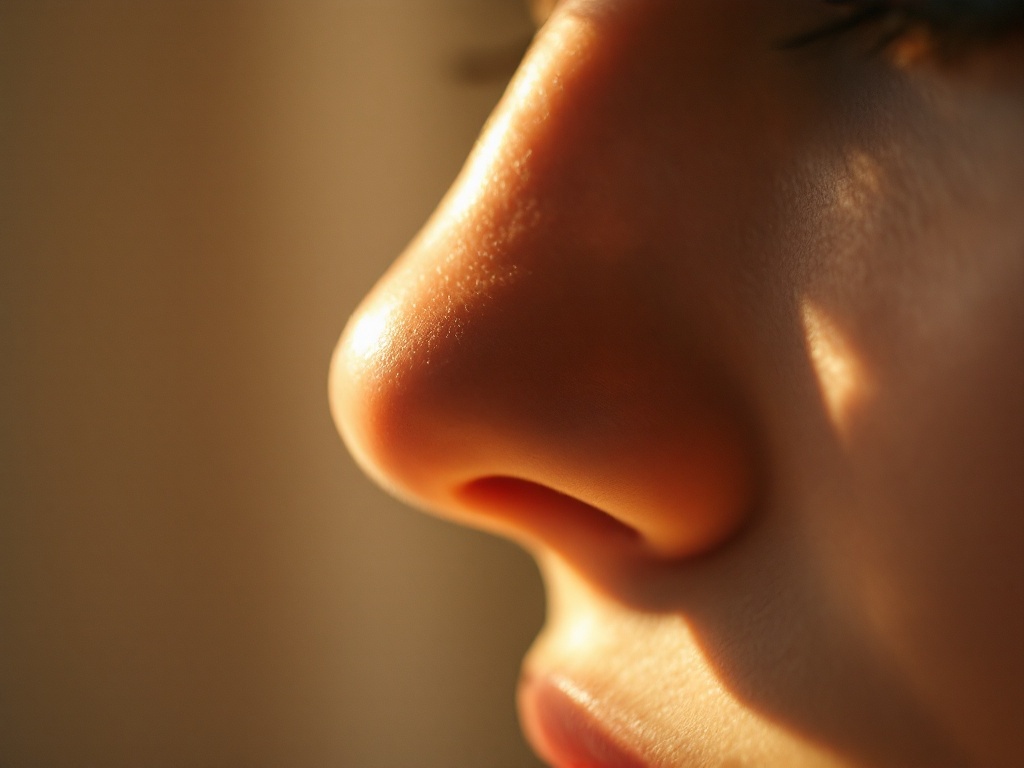
The tip has the thickest skin on the nose. Nasal skin is not uniform. It is relatively thin over the upper bony vault, thins further at the mid-bridge, then thickens considerably over the tip and above the nostrils, an area rich in sebaceous glands. Thicker skin holds more fluid, takes longer to shrink-wrap around the reshaped cartilage beneath it, and masks fine definition until swelling fully resolves. Patients with thick, oily skin, which is more common in some ethnic backgrounds, should expect the longest timelines, sometimes 18 months to two years for the final contour to emerge.
Lymphatic drainage in the tip is structurally disadvantaged. Swelling clears from tissue through lymphatic channels, and the nose drains upward and laterally toward the cheeks and eyes. Surgery, particularly open rhinoplasty with its small columellar incision, temporarily interrupts some of these channels at the base of the nose. Gravity does the tip no favors either: it sits at the lowest, most distal point of the surgical field. Fluid that would drain briskly from the bridge pools in the tip until new lymphatic pathways regenerate, a process measured in months, not weeks. This is also why many patients notice their tip looks more swollen in the morning after lying flat overnight, and why surgeons often recommend sleeping with the head elevated early in recovery.
Scar tissue remodels on a slow biological clock. Beneath the skin, the body lays down collagen wherever tissue was cut, sutured, or grafted. The tip is where most of the structural work in modern rhinoplasty happens: dome sutures, tip grafts, strut placement, cartilage repositioning. Early collagen is disorganized and bulky. Over roughly 6 to 18 months, enzymes called matrix metalloproteinases break down and reorganize that collagen into a thinner, more orderly scar. Until that remodeling finishes, a layer of firm, slightly swollen tissue sits between the sculpted cartilage and the visible surface.
Numbness and stiffness are part of the same process. Small sensory nerve branches to the tip are stretched or divided during surgery. As they regrow, patients often describe the tip as numb, tingly, or oddly firm to the touch, sometimes with a woody feel when they press on it. Nerve regeneration proceeds at roughly a millimeter a day, and normal or near-normal sensation typically returns over 6 to 12 months. A stiff-feeling tip does not mean a stiff-looking result.
What the timeline typically looks like. While every case differs, a common pattern holds. In the first two weeks, overall swelling drops fast after the splint comes off, but the tip remains visibly full. By three months, roughly 70 to 80 percent of swelling has resolved, and the bridge often looks close to final while the tip still reads slightly bulbous or rotated compared to the plan. Between six and twelve months, definition sharpens gradually as skin redrapes. Beyond a year, changes become subtle but real, especially in thick-skinned patients and in revision cases, where prior scar tissue slows everything further.
What helps, and what does not. Head elevation during sleep, avoiding heavy sodium intake early on, and skipping activities that raise blood pressure in the head during the first weeks all have plausible mechanisms behind them: less hydrostatic pressure means less fluid pushed into tissue. Some surgeons use taping regimens or, in select thick-skinned patients, small doses of injected corticosteroid to temper scar buildup in the supratip, the area just above the tip where fullness can persist. These are clinical decisions with tradeoffs, not universal recommendations, and steroid injections in particular require judgment because overuse can thin tissue. What does not help: pressing or massaging the tip on your own, comparing daily selfies under different lighting, or evaluating the result before the six-month mark.
When persistent fullness deserves a closer look. Most tip fullness is simply unfinished healing. But a supratip that stays convex past a year, sometimes called pollybeak fullness, can reflect excess scar tissue or a structural issue rather than swelling, and it is a reasonable topic to raise at a follow-up visit. The distinction matters because scar-related fullness may respond to conservative measures, while structural causes generally do not.
The practical takeaway is patience grounded in biology, not blind reassurance. The tip settles last because its skin is thickest, its drainage is slowest, and it hosts most of the internal reconstruction. Judging a rhinoplasty by the tip at three months is like judging bread halfway through baking. The result is in there. It just is not visible yet.
Related reading: Why the Nasal Tip Is the Last Thing to Settle After Rhinoplasty and Why the Nasal Tip Is the Last Thing to Settle After Rhinoplasty.
More in Explainer
View all →- The Internal Nasal Valve: Why Millimeters Decide Whether You Breathe Well After Rhinoplasty
- Spreader Grafts vs Autospreader Flaps: What Actually Holds the Middle of Your Nose Open
- Why the Nasal Tip Is the Last Part to Settle After Rhinoplasty
- Spreader Grafts vs. Autospreader Flaps: How Surgeons Keep the Middle of Your Nose Open