
Procedure Guide · July 27, 2026 · 5 min · By Zofia Cardenas
Why the Nasal Tip Is the Last Part of Your Nose to Settle After Rhinoplasty
Patients often panic when the tip still looks swollen at six months. The explanation lies in skin thickness, lymphatic drainage, and how scar tissue matures, not in anything going wrong.
Ask any surgeon who performs rhinoplasty regularly what question they hear most in the first year after surgery, and a version of this one comes up constantly: why does my tip still look big? The bridge of the nose often looks refined within weeks, yet the tip can stay puffy, stiff, or subtly rounded for twelve months or longer. This is not a complication. It is predictable anatomy, and understanding the mechanism can spare patients a great deal of unnecessary worry.
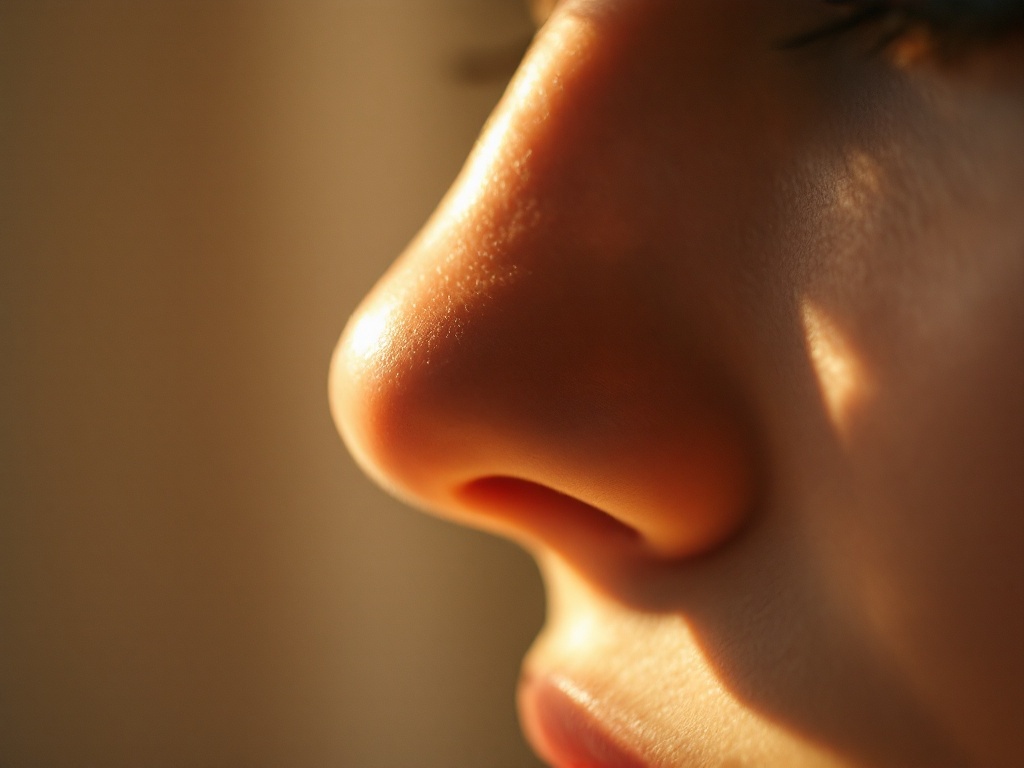
The skin over the tip is different tissue. The skin covering the upper two thirds of the nose is relatively thin and adheres closely to the underlying bone and cartilage. Over the tip and the supratip, the region just above the tip, the skin thickens considerably and contains more sebaceous glands and a denser layer of fibrofatty tissue. Thicker tissue holds more fluid, and fluid is the currency of postoperative swelling. When surgeons say a patient has thick skin, they are often predicting a longer settling timeline for the tip specifically, sometimes 18 to 24 months before the final contour is fully visible.
Lymphatic drainage runs uphill from the tip. Swelling resolves when the lymphatic system carries interstitial fluid away from the surgical site. In the nose, lymphatic channels drain from the tip upward and outward toward the cheeks and the lymph nodes near the jaw. The tip sits at the bottom of that drainage pathway, which means fluid pools there and clears last. Gravity compounds the problem during the day, which is why many patients notice the tip looks fuller in the evening than in the morning for months after surgery. This is also the mechanism behind the common instruction to sleep with the head elevated during early recovery.
Open approaches add one more variable. In an open rhinoplasty, the surgeon makes a small incision across the columella, the strip of tissue between the nostrils, and lifts the skin envelope to work directly on the tip cartilages. This gives excellent visibility but temporarily disrupts some of the small lymphatic vessels crossing that area. Closed rhinoplasty, performed entirely through incisions inside the nostrils, disturbs those channels less, and tip swelling often resolves somewhat faster as a result. Neither approach is universally better. Surgeons choose based on the complexity of the tip work required, and the lymphatic difference is one trade-off among many.
Scar tissue matures on its own schedule. Beneath the skin, the body responds to surgery by laying down collagen. Early scar tissue is disorganized, firm, and bulkier than the mature version. Over roughly a year, enzymes remodel that collagen, cross-linking softens, and the tissue contracts and thins. This remodeling is why a tip that feels hard and immobile at three months gradually regains flexibility, and why definition that seemed absent at six months can emerge at twelve. The cartilage grafts and sutures a surgeon places during tip work are essentially a scaffold. The final shape depends on how the soft tissue shrink-wraps around that scaffold, and that process cannot be rushed.
What a realistic timeline looks like. Broad averages, acknowledging individual variation: at two weeks, most visible bruising has faded and the nose looks acceptable in casual settings, though the tip is clearly swollen. At three months, roughly 70 to 80 percent of overall swelling has resolved, but most of what remains is concentrated in the tip and supratip. At six months, the tip has softened noticeably but still lacks final definition, particularly in thick-skinned patients. At twelve months, most patients see close to the final result, though subtle refinement can continue into a second year. Revision surgeons generally decline to operate before the twelve month mark for exactly this reason: judging a result on unsettled tissue leads to unnecessary revisions.
What helps, and what does not. Head elevation during sleep, limiting high-sodium meals, and avoiding pressure on the tip from glasses or face-down sleeping all support normal lymphatic clearance in the early months. Some surgeons use small doses of injected steroid in the supratip if firm swelling persists past several months, a decision that requires clinical judgment because steroids can thin tissue if overused. What does not help: aggressive self-massage without a surgeon's guidance, taping regimens copied from social media, or comparing progress photos against patients with different skin thickness. Two people with identical surgery can sit months apart on the settling curve purely because of tissue type.
The bottom line. Persistent tip swelling in the first year after rhinoplasty is a feature of nasal anatomy, not a warning sign. The tip has the thickest skin, sits at the end of the lymphatic drainage line, and depends on slow collagen remodeling to reveal its final shape. Patients who understand this mechanism tend to report higher satisfaction, not because their results differ, but because their expectations match the biology. When in doubt about a specific concern, the right move is a follow-up visit with the operating surgeon, who can distinguish normal maturation from the rare issues that genuinely need attention.
Related reading: Why the Nasal Tip Is the Last Part to Settle After Rhinoplasty.
More in Explainer
View all →- Why the Nasal Tip Is the Last Part to Settle After Rhinoplasty
- Spreader Grafts, Explained: Why a Sliver of Cartilage Decides Whether You Can Breathe After Rhinoplasty
- Why the Tip Is the Last Part of Your Nose to Look Finished
- Spreader Grafts, Explained: Why Surgeons Rebuild the Middle of the Nose to Protect Breathing