
Before You Decide · July 20, 2026 · 6 min · By Zofia Cardenas
Synthetic Nasal Implants vs Your Own Cartilage: How Surgeons Decide What Goes Inside Your Nose
When a nose needs added height or structure, a surgeon can build it from your own cartilage or from a manufactured implant. The choice shapes the look, the risks, and the odds of needing revision. Here is how the two approaches actually compare.
Most rhinoplasty conversations focus on what a surgeon removes: a dorsal hump, a wide tip, a bump on the profile. Just as often, though, the harder problem is what to add. A low bridge, a short nose, or a flat tip needs new structure built up, and that raw material has to come from somewhere. Broadly, there are two families of options: your own tissue, called autologous grafts, and manufactured materials, called alloplastic implants. Understanding the difference explains a great deal about why two surgeons can propose very different plans for the same nose.
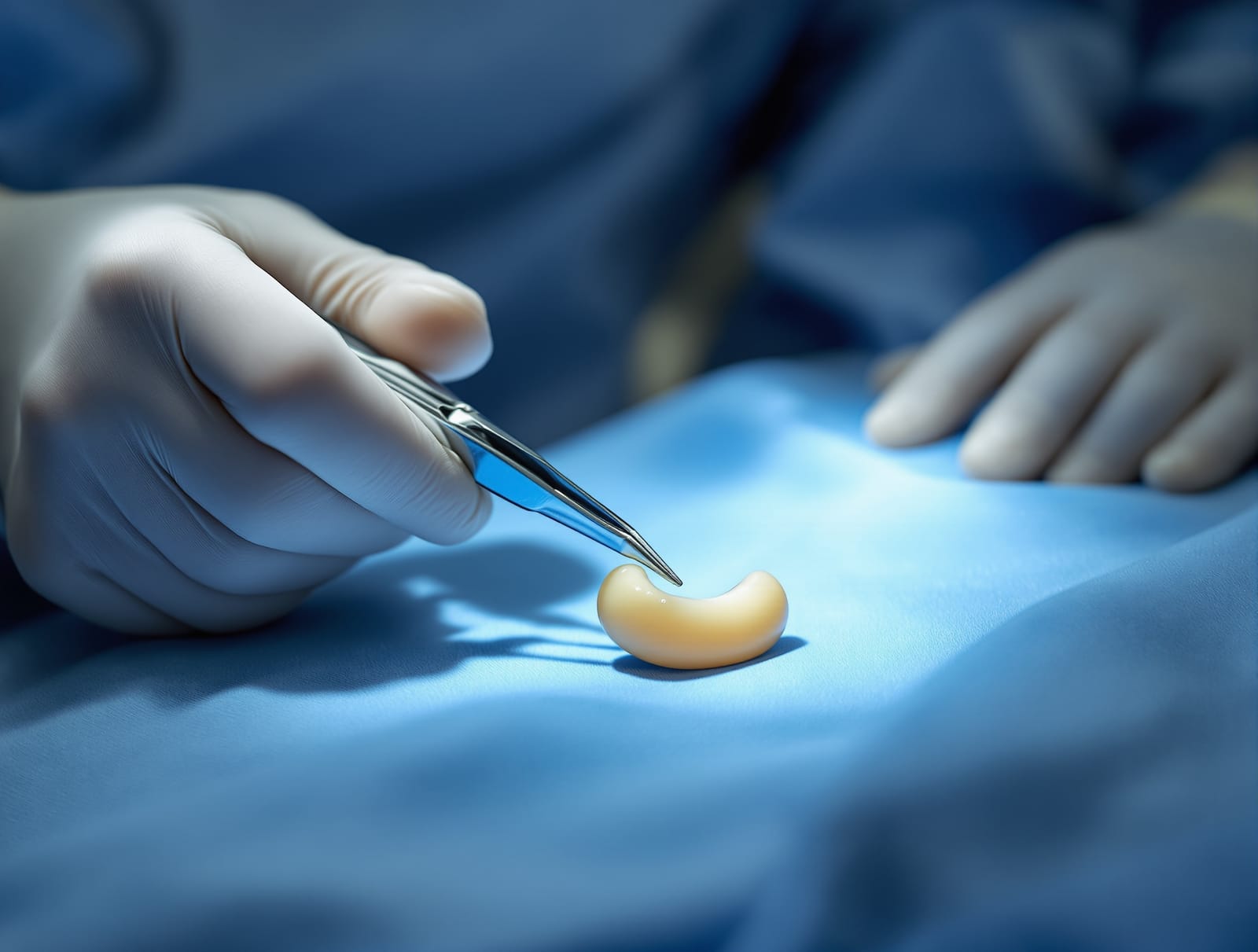
What an alloplastic implant actually is. An alloplastic implant is a solid, factory-made material placed under the skin to add height or projection, most often along the bridge. The three materials used most widely are solid silicone, expanded polytetrafluoroethylene, better known by the brand name Gore-Tex, and porous high-density polyethylene, sold as Medpor. Silicone is smooth and non-porous, which makes it easy to carve and easy to remove but also means the body walls it off in a thin capsule rather than growing into it. Gore-Tex and Medpor are porous, so surrounding tissue grows into the material and anchors it, which lowers movement but makes later removal more involved. All three are used far more commonly in Asian and some ethnic rhinoplasty practices, where the goal is frequently to augment a naturally lower bridge.
What autologous cartilage brings instead. The alternative is to borrow the patient's own cartilage. The first choice is usually the septum, the wall inside the nose, because it is stiff, straight, and already in the surgical field. When more material is needed, surgeons turn to ear cartilage, which is curved and softer, or to rib cartilage, which is abundant and strong enough to rebuild an entire framework. Because this tissue is living and comes from the patient, it integrates with the body, carries essentially no risk of rejection, and resists infection far better than any synthetic. That biological compatibility is the single biggest reason many surgeons in the United States favor cartilage for structural work, a preference reflected in how structural grafting is taught.
The infection and extrusion question. The central tradeoff is risk over time. Because an implant is a foreign body, it never fully becomes part of you, and that leaves a permanent, low-level vulnerability. Bacteria can colonize the implant surface and form a biofilm that antibiotics struggle to clear, and in some cases the implant can gradually work its way toward the skin, a complication called extrusion. Published reviews in the surgical literature report meaningfully higher rates of infection, displacement, and extrusion for alloplastic implants than for autologous cartilage, with silicone dorsal implants in particular showing complication rates that climb the longer the implant is in place. Cartilage grafts are not risk free, and harvesting rib adds a small chest incision and its own recovery, but once healed they tend to stay quiet for decades.
Why anyone chooses an implant at all. If cartilage is so reliable, why use synthetics? Convenience and supply. An implant needs no second surgical site, so there is no donor area to heal, no chest scar, and often a shorter operation. The material is available in unlimited quantity and predictable shape, which matters when a nose needs substantial augmentation that would exhaust the available septal and ear cartilage. For the right patient with a skilled surgeon, a well-placed implant can give a clean, lasting result. The debate is really about how those advantages weigh against a lifetime of slightly elevated risk.
Revision changes the math. In revision cases, where a previous surgery has already used up the septum or left scarred, thinned tissue, the calculus shifts again. Surgeons often reach for rib cartilage precisely because it supplies enough sturdy material to rebuild support, and many will remove a problematic silicone implant and replace it with the patient's own tissue. This is one reason the choice made in a first operation echoes for years: an implant that later becomes infected or shifts frequently leads to a more complex second surgery, not a simple swap.
What the evidence and the boards say. The American Society of Plastic Surgeons describes both cartilage grafts and synthetic implants as accepted tools for adding structure and stresses that material choice depends on the individual nose and goals, not a single right answer (ASPS). The American Academy of Facial Plastic and Reconstructive Surgery similarly frames grafting as a routine part of modern rhinoplasty (AAFPRS). And patient-facing guidance from the Mayo Clinic underscores that rhinoplasty may involve cartilage taken from deeper in the nose or from the ear, reinforcing how central autologous tissue is to standard practice (Mayo Clinic).
Questions worth asking. If augmentation is on the table, a few questions cut to the heart of the decision: will you build with my own cartilage or an implant, and why for my nose specifically; if an implant, which material and what is its infection and extrusion rate over ten years; and if cartilage, where will you take it and what does that donor site recovery involve. A surgeon who answers in specifics, tied to your anatomy rather than a house default, is thinking about the next few decades of your nose, not just the photograph at one year.
The honest summary is that there is no universally correct material, only tradeoffs matched to a particular nose, a particular goal, and a particular surgeon's experience. Autologous cartilage asks more of the body up front and rewards it with durability and low long-term risk. Alloplastic implants ask less at the start and carry a small but real risk that never fully disappears. Knowing which side of that trade you are being offered, and why, is one of the most useful things a patient can take into a consultation.
Related reading: Rib Cartilage Rhinoplasty and Structural Grafting in Rhinoplasty.
More in Explainer
View all →- Big nose operation: the six-part mirror audit that tells you what a reduction rhinoplasty should actually reduce
- Piezo vs. Osteotome: How Surgeons Actually Reshape Nasal Bone, and Why the Tool Matters Less Than You Think
- Why Nasal Tip Swelling Outlasts Everything Else After Rhinoplasty
- Why the Tip Is Always Last: The Physiology of Post-Rhinoplasty Swelling