
Procedure Guide · July 28, 2026 · 5 min · By Zofia Cardenas
Spreader Grafts, Explained: The Small Cartilage Struts That Decide Whether You Can Breathe After Rhinoplasty
They are millimeters wide and invisible from the outside, yet spreader grafts are one of the most consequential decisions in modern rhinoplasty. Here is what they do, why surgeons use them, and when they are not needed.
Ask most patients what happens during rhinoplasty and they will describe the visible parts: reducing a hump, refining a tip, straightening a crooked bridge. Ask a surgeon what keeps them up at night and many will point to something patients never see, the internal nasal valve. Spreader grafts exist almost entirely to protect it.
What the internal nasal valve actually is
The internal nasal valve is the narrowest segment of the entire airway, the slit-like angle formed where the upper lateral cartilages meet the septum, typically 10 to 15 degrees in most noses. Because airflow resistance rises steeply as a passage narrows, a change of even one millimeter here has an outsized effect on how easily air moves. Physics is unforgiving at this scale: resistance in a tube is inversely related to the fourth power of its radius, so small structural losses produce large functional ones.
Here is the problem. The classic maneuver of hump reduction, shaving down the bony and cartilaginous dorsum, disrupts the roof that held the upper lateral cartilages in position. Once that roof is opened, the upper lateral cartilages tend to fall inward over months to years as scar tissue contracts. The result can be a pinched middle vault, the characteristic inverted-V deformity visible on the bridge, and a nose that looks smaller but breathes worse.
What a spreader graft does mechanically
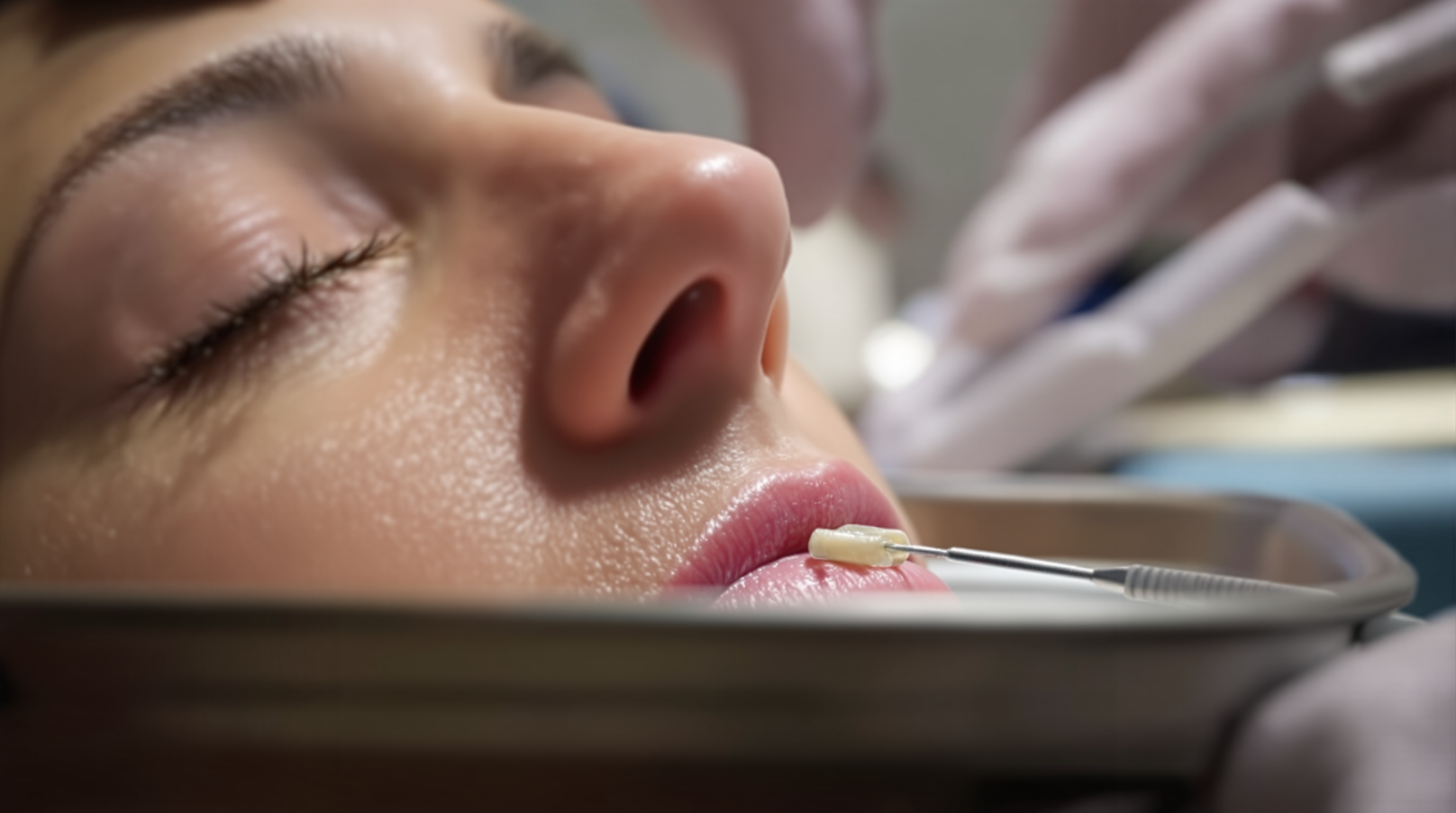
A spreader graft is a thin strip of cartilage, usually 1 to 3 millimeters thick and roughly 25 to 30 millimeters long, most often carved from the patient's own septum. The surgeon places it in a pocket between the septum and the upper lateral cartilage, one per side or on a single side for asymmetric noses, then sutures it in position.
The graft works as a mechanical spacer. It holds the upper lateral cartilage away from the septum, preserving the valve angle against the inward pull of healing tissue. Secondarily, it restores width and straight lines to the middle third of the bridge, which is why spreader grafts are as much an aesthetic tool as a functional one. On a crooked nose, an asymmetric spreader can camouflage a deviated dorsal septum by building out the concave side.
Spreader flaps: the tissue-sparing cousin
A related technique deserves mention because patients increasingly encounter the term. In a spreader flap, sometimes called an auto-spreader, the surgeon does not remove the cartilaginous portion of the hump entirely. Instead, the excess upper lateral cartilage is folded inward on itself and sutured to the septum, so the patient's own redundant tissue does the job a graft would have done.
The appeal is efficiency: no separate graft to harvest, less septal cartilage consumed, and the folded tissue is already attached to its blood supply and native position. The limitation is that spreader flaps only work when there is enough cartilage height to fold, generally in moderate humps. Very small humps leave nothing to fold, and severely deviated or damaged cartilage may not hold the shape. Comparative studies have generally found similar functional outcomes between grafts and flaps in properly selected patients, which is the key phrase: selection matters more than the technique's name.
Does every rhinoplasty need them?
No, and this is where marketing sometimes outruns evidence. Spreader grafts are strongly indicated when the dorsal roof is opened during hump reduction, when the patient has short nasal bones with a long, weak middle vault, when there is pre-existing valve collapse, or in revision cases where the middle vault has already narrowed. Patients with thick skin and sturdy cartilage undergoing minor refinement may not need them at all, and preservation rhinoplasty techniques, which lower the dorsum without opening the roof, are designed specifically to avoid the problem that spreader grafts solve.
There are trade-offs. Spreader grafts add width to the middle third of the nose, usually a fraction of a millimeter per side, which most patients never notice but which matters in a patient seeking a very narrow bridge. They consume septal cartilage that might be needed elsewhere. Rarely, a graft can shift or become palpable.
Questions worth asking in consultation
If hump reduction is part of your surgical plan, it is reasonable to ask how the middle vault will be reconstructed afterward: spreader grafts, spreader flaps, a preservation approach, or a judgment call made during surgery. Ask what the plan is if septal cartilage proves insufficient, since ear or rib cartilage are the usual backups. A surgeon who can explain the valve mechanics in plain terms is telling you something about how they think.
The broader lesson is one that applies across rhinoplasty: the operations that age well are the ones that treat the nose as a load-bearing structure, not a sculpture. Spreader grafts are a few slivers of cartilage, but they represent the field's hard-won understanding that a nose which cannot breathe is not a successful result, no matter how it photographs.
More in Explainer
View all →- Big nose operation: the six-part mirror audit that tells you what a reduction rhinoplasty should actually reduce
- Piezo vs. Osteotome: How Surgeons Actually Reshape Nasal Bone, and Why the Tool Matters Less Than You Think
- Why Nasal Tip Swelling Outlasts Everything Else After Rhinoplasty
- Why the Tip Is Always Last: The Physiology of Post-Rhinoplasty Swelling