
Recovery · May 2, 2026 · 6 min · By Emory Blackwood
When Can I Wear Glasses After Rhinoplasty? Timeline and Solutions
Wearing glasses after rhinoplasty requires patience. Here's when.
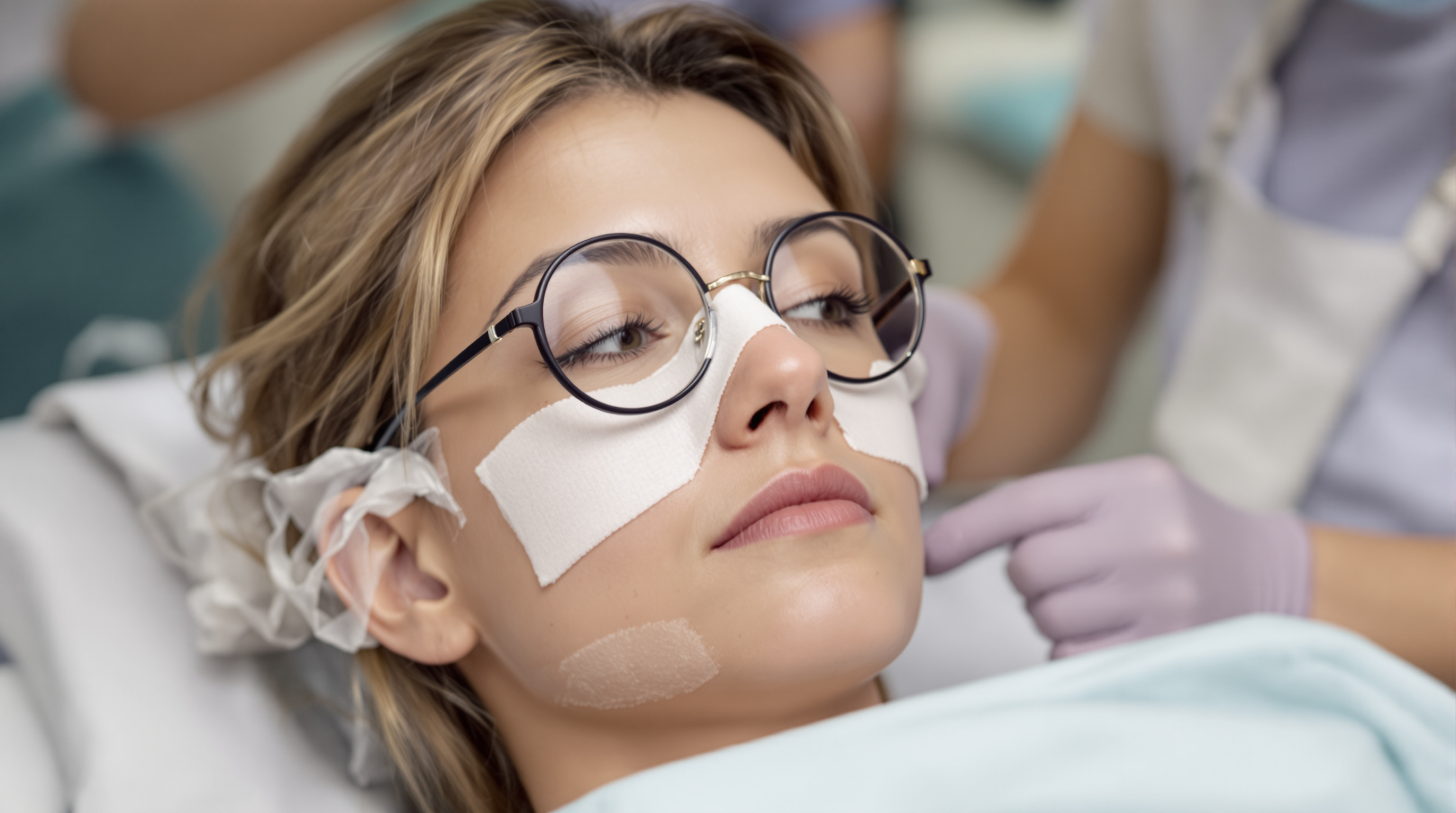
One of the most frequent practical questions patients ask during rhinoplasty consultation involves eyewear: when will they be able to resume wearing glasses, and what alternatives exist during early recovery. Wearing glasses after rhinoplasty presents a genuine clinical challenge because the weight and pressure of frames directly contact the nasal dorsum and sidewalls, precisely where surgical reconstruction occurs. Understanding the timeline and available workarounds helps patients plan accordingly.
The standard surgical recommendation prohibits glasses for 3 to 4 weeks post-operatively, though some surgeons extend this window to 6 weeks for cases involving dorsal grafting or extensive structural work. The rationale is straightforward: nose splints and early scar tissue lack mechanical strength. Frame weight, typically 5 to 20 grams depending on style and material, exerts distributed pressure across the dorsum. Even light pressure can disrupt newly formed bone or cartilage, shift graft position, or create creasing in immature scar tissue that becomes permanent after remodeling is complete.
The first 10 to 14 days after surgery, most patients still wear external nasal splints or tape, making glasses impossible anyway. Once internal splints are removed, usually between days 5 to 7, external taping or splinting often continues for another week or two. At that stage, frames cannot be positioned correctly and would interfere with splint stability.
By week 3 to 4, swelling has subsided enough that most patients can see reasonably well without correction if their baseline prescription is mild. Those with moderate to high myopia or hyperopia face genuine functional difficulty. Several interim solutions exist. Contact lenses, if the patient normally tolerates them, bypass the pressure problem entirely. Many surgeons actively recommend contact lenses as the ideal temporary solution during the splint-free but still-healing phase. Provided the eyes are not irritated from anesthesia or dry from reduced blinking around facial swelling, contacts work seamlessly.
Headband-mounted systems, though less common now, represent an older workaround: special straps suspend corrective lenses from the forehead and temples without contacting the nose. Newer designs exist but remain expensive and cosmetically awkward. Some patients use surgical loupes or magnifying glasses suspended from the head rather than worn directly. These remain niche solutions.
Contact lens suitability depends on corneal health and tear film stability post-operatively. Some patients experience dry eyes from facial swelling that reduces eyelid closure; these individuals may find contact wear uncomfortable until week 5 or 6. Artificial tears used liberally ease this. Gel-based daily disposables sometimes prove gentler than traditional hydrogel or silicone hydrogel formulations during early healing.
Following your surgeon's specific rhinoplasty aftercare guide clarifies when glasses restrictions can be lifted for your particular anatomy and surgical approach. Similarly, understanding rhinoplasty cast and splint care reveals why glasses must wait until splints are gone and underlying structures possess sufficient mechanical stability.
After week 4 to 6, depending on surgical extent and individual healing pace, most surgeons clear patients to resume glasses. At that point, dorsal bone has calcified, cartilage has regained tensile strength, and grafts have achieved adequate fixation. Frame weight no longer poses mechanical risk. Patients should reintroduce glasses gradually, ensuring frames sit properly on the bridge without creating localized pressure points. Some surgeons recommend slightly adjusting frame position higher or lower than pre-operative wear to distribute pressure differently.
Patients with significant refractive error should plan ahead. Ordering contact lenses before surgery, confirming their comfort level with contacts, or arranging temporary eyeglass adjustments prevents the frustration of being unable to see clearly for a month. The investment in contact lens trial and adaptation before surgery pays dividends during recovery. Once cleared to wear glasses again, most patients resume their normal eyewear routine without further restrictions.